
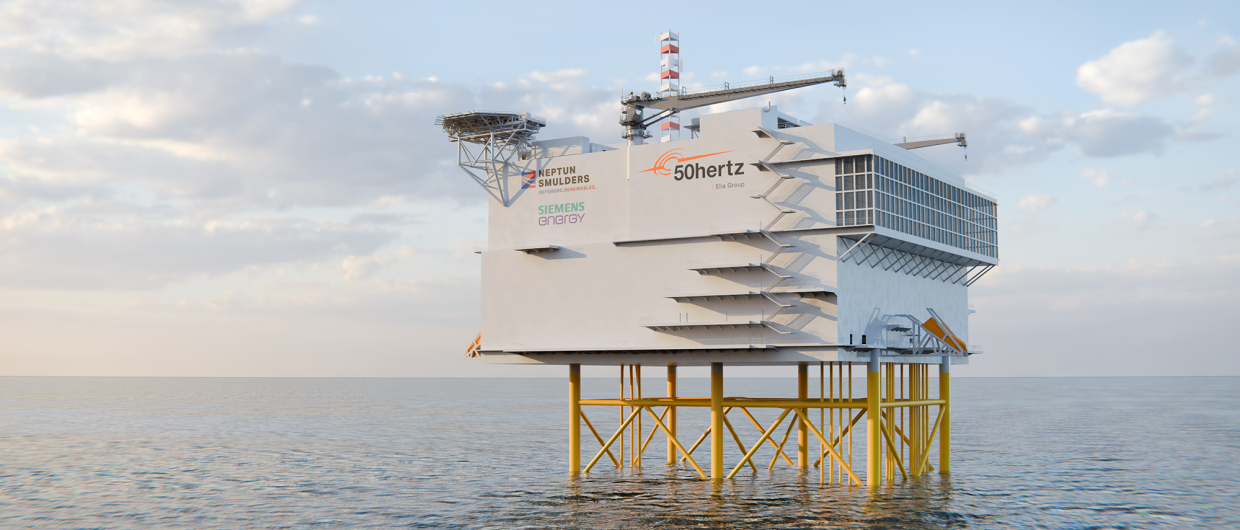
Offshore HVDC Platforms
Offshore energy infrastructure. Built in Rostock.
Offshore HVDC platforms are among the largest and most technically sophisticated structures in modern energy infrastructure. They collect electricity from large offshore wind farms, convert it from alternating current to direct current at sea, and then transmit it to shore over long distances with minimal losses. Put simply, such a platform functions like a large substation at sea—only significantly more complex, larger, and designed to withstand extreme conditions on the high seas.
Translated with DeepL.com (free version)
2 GW - A figure that powers entire regions
A transmission capacity of 2 GW is hard to grasp. In simple terms, this means:
- more power than a large nuclear power plant
- electricity for about two million households
- a central link between an offshore wind farm and the onshore power grid
- a key component of the energy transition
- energy infrastructure that is important for entire regions
This transforms a technical platform into a key structure for the future electricity supply.
A Site Committed to Industrial Responsibility
Rostock offers ideal conditions for this: shipbuilding expertise, port logistics, and the maritime supply chain are all conveniently located in close proximity. Mecklenburg-Western Pomerania is thus steadily developing into a key European hub for offshore energy infrastructure. NEPTUN WERFT plays a central industrial role in this context. Here, facilities are being built that will bring renewable energy from the sea to land for decades to come, thereby making a tangible contribution to energy security.
In short:
What is being built in Rostock is no ordinary structure. Here, energy infrastructure for the coming decades is taking shape.